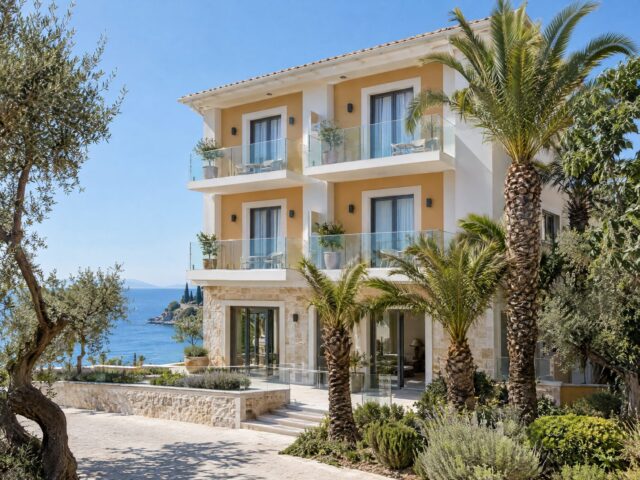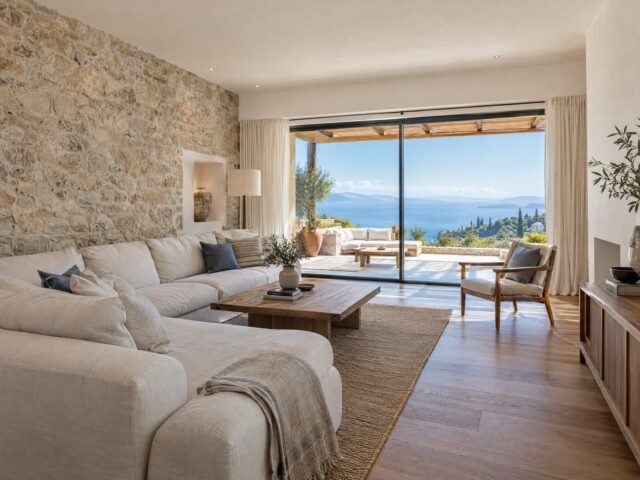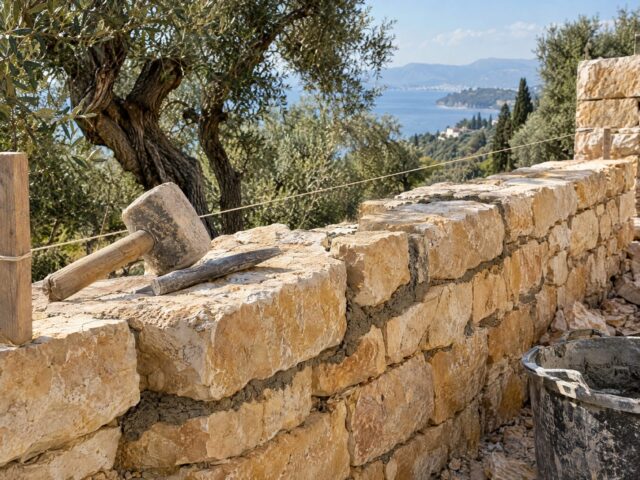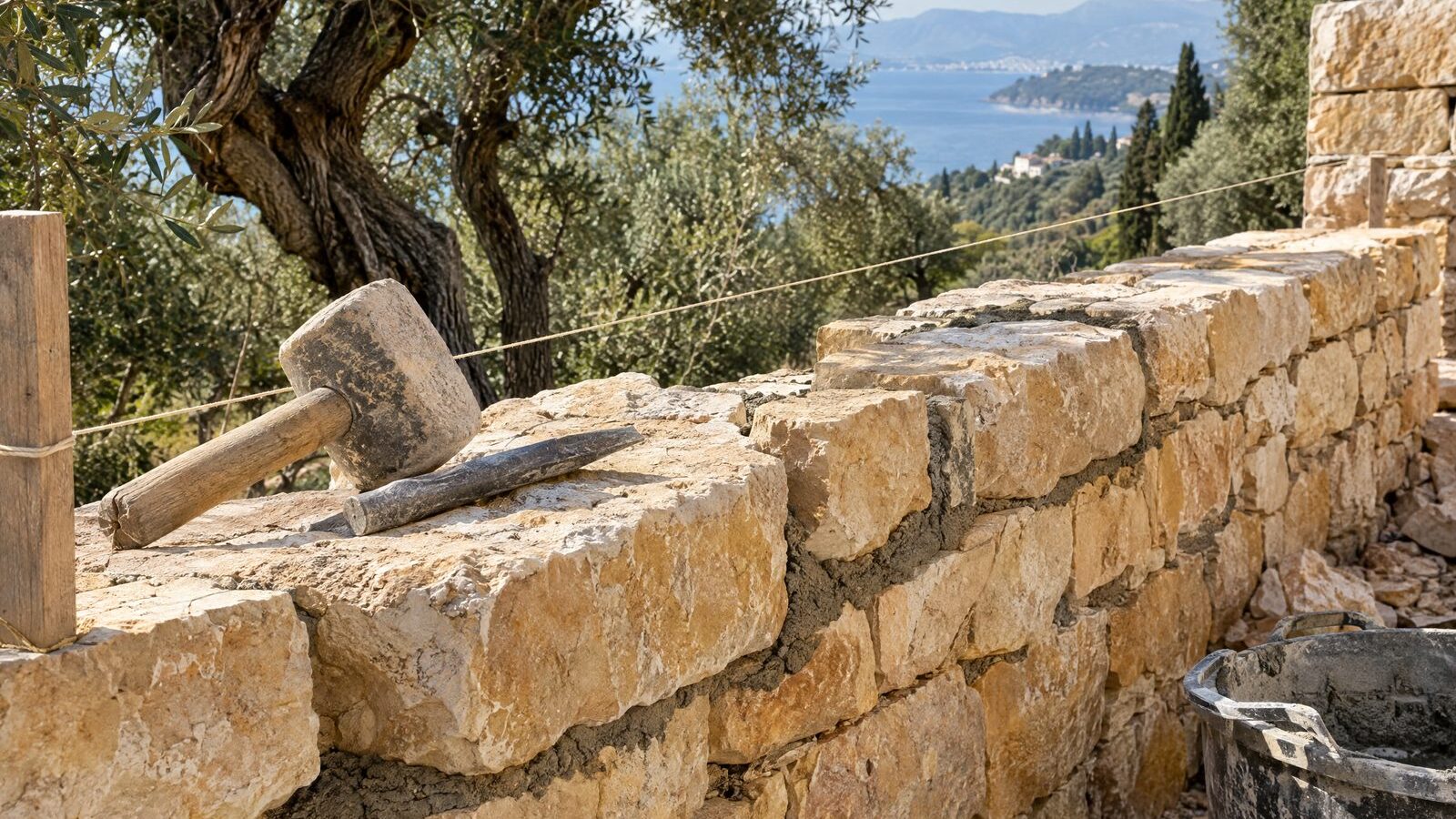
Traditional Stone masonry is the living art that shapes the unique look of Corfu. Stone is what gives every Corfu house its character: the honey colored limestone of the villages, the dry walls between the olive groves, the arches of the Venetian houses. At the heart of the island lies Corfu Town, a globally recognized UNESCO World Heritage site. Here, the art of stone work has kept traditions alive since the Venetian era of the 14th century. Our masons build new stone walls and cladding, restore old ones, and shape arches, steps, fireplaces and terraces in local stone. From the towering facades of the historic capital to the quietest hillside villages, our stone heritage is not just a reminder of the past—it is a continuous, living tradition that defines our landscape.
Which stone do we use in Corfu?
Mostly local limestone from the island and the mainland opposite, in the warm beige and grey tones that match the old houses. For cladding on new builds we cut it in regular courses or lay it rustic or mostly handmade piece by piece, depending on the design of the Stone masonry. For restorations we reuse the stone from the house itself wherever we can, so the repaired wall is indistinguishable from the original.
What kind of stone work do we do?
- structural stone walls and repairs on old houses, with lime mortar
- stone cladding on concrete and brick walls of new villas
- dry stone boundary and terrace walls, the traditional way without mortar
- arches, lintels, window surrounds and steps
- fireplaces, barbecues and outdoor kitchens
- retaining walls faced in stone to match the landscape
Why lime mortar on old stone walls?
Because the wall was built with it Lime mortar is softer than the stone, so the wall can move slightly without cracking the stone, and it lets moisture out. Cement mortar is harder than the limestone, traps the water and, over a few years, the stone itself starts to crumble around the hard joints. On every restoration we match the mortar color and the joint style to reprlicate the original Stone masonry.
Frequently asked questions
Is stone cladding much more expensive than render?
It costs more per square metre, which is why many owners use it on the ground floor, the entrance and the garden walls and render the rest. The quote shows both options line by line.
Can you rebuild a collapsed dry stone wall?
Yes. We sort the fallen stone, rebuild the wall with a proper batter and drainage and add new stone only where it is missing.
Do stone walls need maintenance?
Very little. Dry stone walls need a check after heavy winter rain, lime pointed walls need repointing after decades, not years.